
Use of PCSO-524® (Antinol®) and Casting for Treatment of Tetraparesis and Neck Pain Due to Atlantoaxial Instability and Subluxation of the 1st-2nd Cervical Vertebrae

 Authors:
Abstract
A 7 months old male Pomeranian dog was admitted to Thong Lor animal hospital for signs of intermittent leg paresis and hyperesthesia during the past 2 weeks.
Physical examination found grade II tetraparesis, neck hyperflexion, spasm of cervical muscle, and cervical hyperesthesia.
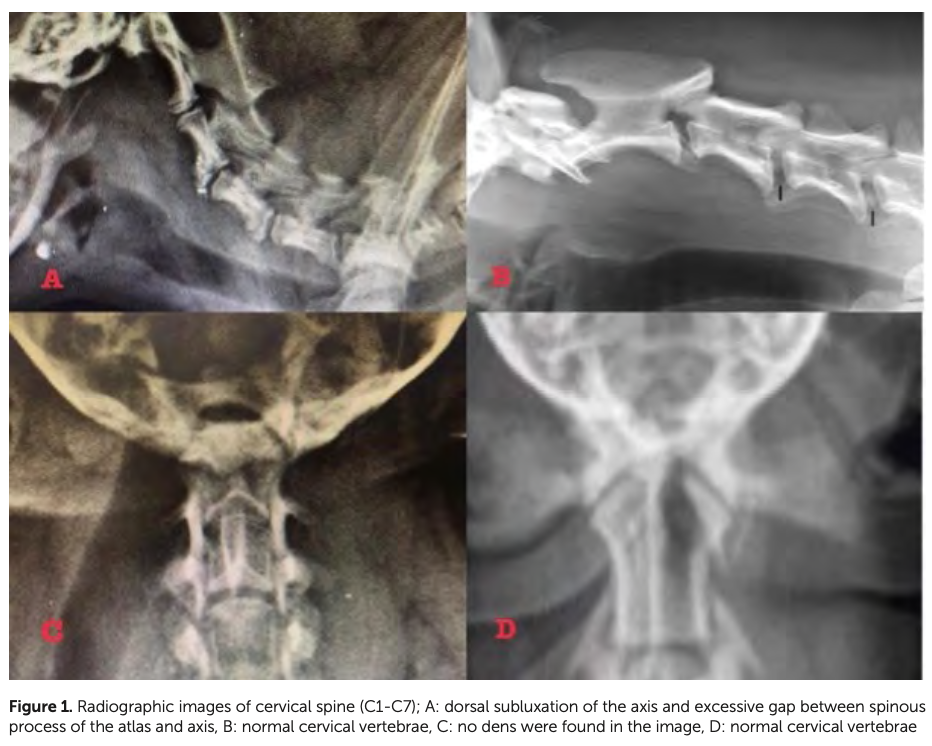
X-ray examination showed atlantoaxial instability and dorsal subluxation of the first and second cervical vertebrae. The disease is congenital and commonly found in toy breed dogs (Itoh H. et al, 2017).
A cast was used to stabilize the joints for 12 weeks in conjunction with medicinal treatment including pain killer medicine, gabapentin, and 1 capsule of PSCO-524® (Antinol®) sid.
After one week of the treatment, the dog showed no sign of pain when touched but the signs of hind limb paresis still remained. The treatment was continued until the 10th week that gabapentin was terminated and no recurrence of pain was detected since then.
After 12 weeks of the treatment, the cast was removed and PSCO-524® (Antinol®) 1 capsule sid was continued and the dog did not show any progressive development of clinical signs.
Keywords: Atlantoaxial instability, dog, small breed, PSCO-524®, Antinol®, tetraparesis, hyperesthesia, congenital, dorsal subluxation