Antinol® Latest Studies
Sorted by recent
 Filter Studies by Smart Tags
Bone & JointCardiovascularCase Study & ProceedingCatDogEAB 277™EfficacyExotic PetFighting cockImmunologyNeuro & BehaviorOphthalmologyOralRabbitRenalRespiratoryRodentSafetySkinUTI
Smart Search
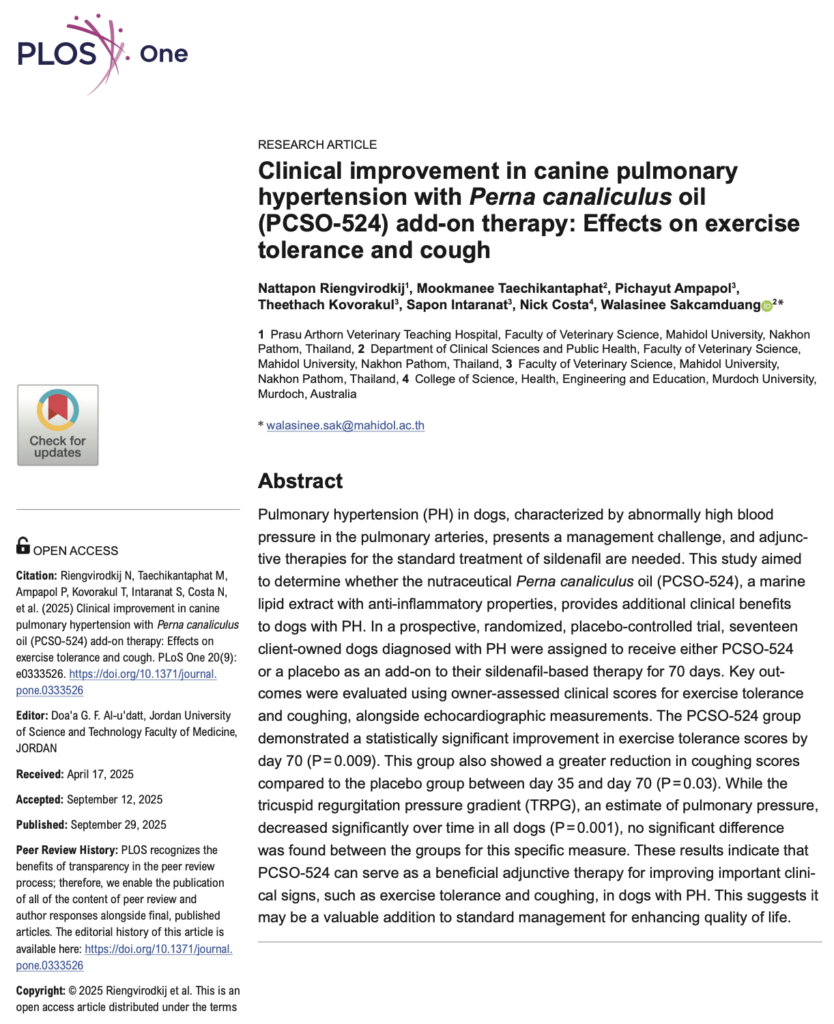
Clinical improvement in canine pulmonary hypertension with Perna canaliculus oil (PCSO-524) add-on therapy: Effects on exercise tolerance and cough

Abstract
This prospective, randomized, placebo-controlled trial tested green-lipped mussel oil (PCSO-524) added to sildenafil-based therapy in dogs with pulmonary hypertension (PH), mostly secondary to myxomatous mitral valve disease. After 70 days, owner-assessed exercise tolerance improved significantly in the PCSO-524 group (P = 0.009), and the improvement in coughing between Day 35 and Day 70 was greater than with placebo (P = 0.03). The tricuspid regurgitation pressure gradient (TRPG), an echocardiographic estimate of pulmonary arterial pressure, fell in all dogs (P = 0.001), with no difference between groups.
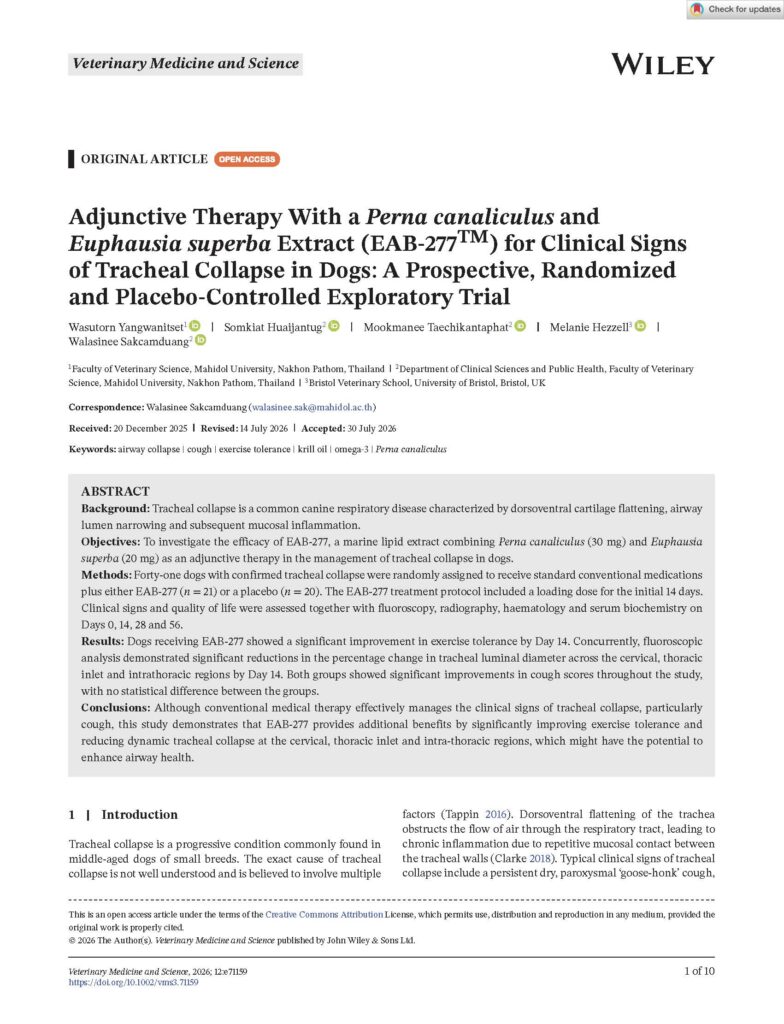
Adjunctive Therapy With a Perna canaliculus and Euphausia superba Extract (EAB-277TM ) for Clinical Signs of Tracheal Collapse in Dogs: A Prospective, Randomized and Placebo-Controlled Exploratory Trial
ABSTRACT Background: Tracheal collapse is a common canine respiratory disease characterized by dorsoventral cartilage flattening, airway lumen narrowing and subsequent mucosal inflammation.
Objectives: To investigate the efficacy of EAB-277, a marine lipid extract combining Perna canaliculus (30 mg) and Euphausia superba (20 mg) as an adjunctive therapy in the management of tracheal collapse in dogs.
Methods: Forty-one dogs with confirmed tracheal collapse were randomly assigned to receive standard conventional medications plus either EAB-277 ( n = 21) or a placebo ( n = 20). The EAB-277 treatment protocol included a loading dose for the initial 14 days. Clinical signs and quality of life were assessed together with fluoroscopy, radiography, haematology and serum biochemistry on Days 0, 14, 28 and 56.
Results: Dogs receiving EAB-277 showed a significant improvement in exercise tolerance by Day 14. Concurrently, fluoroscopic analysis demonstrated significant reductions in the percentage change in tracheal luminal diameter across the cervical, thoracic inlet and intrathoracic regions by Day 14. Both groups showed significant improvements in cough scores throughout the study, with no statistical difference between the groups.
Conclusions: Although conventional medical therapy effectively manages the clinical signs of tracheal collapse, particularly cough, this study demonstrates that EAB-277 provides additional benefits by significantly improving exercise tolerance and reducing dynamic tracheal collapse at the cervical, thoracic inlet and intra-thoracic regions, which might have the potential to enhance airway health.
Keywords: airway collapse cough exercise tolerance krill oil omega-3 Perna canaliculus
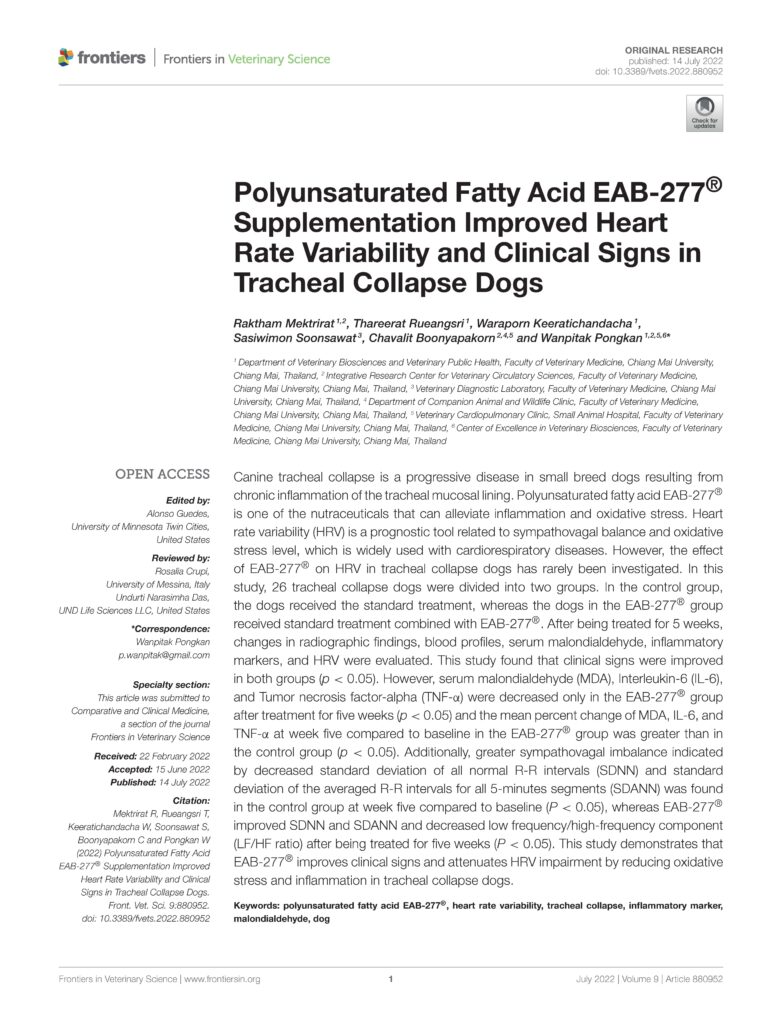
Polyunsaturated Fatty Acid EAB-277® Supplementation Improved Heart Rate Variability and Clinical Signs in Tracheal Collapse Dogs
Canine tracheal collapse is a progressive disease in small breed dogs resulting from chronic inflammation of the tracheal mucosal lining. Polyunsaturated fatty acid EAB-277® is one of the nutraceuticals that can alleviate inflammation and oxidative stress. Heart rate variability (HRV) is a prognostic tool related to sympathovagal balance and oxidative stress level, which is widely used with cardiorespiratory diseases. However, the effect of EAB-277® on HRV in tracheal collapse dogs has rarely been investigated.
In this study, 26 tracheal collapse dogs were divided into two groups. In the control group, the dogs received the standard treatment, whereas the dogs in the EAB-277® group received standard treatment combined with EAB-277®. After being treated for 5 weeks, changes in radiographic findings, blood profiles, serum malondialdehyde, inflammatory markers, and HRV were evaluated. This study found that clinical signs were improved in both groups (p < 0.05). However, serum malondialdehyde (MDA), Interleukin-6 (IL-6), and Tumor necrosis factor-alpha (TNF-α) were decreased only in the EAB-277® group after treatment for five weeks (p < 0.05) and the mean percent change of MDA, IL-6, and TNF-α at week five compared to baseline in the EAB-277® group was greater than in the control group (p < 0.05).
Additionally, greater sympathovagal imbalance indicated by decreased standard deviation of all normal R-R intervals (SDNN) and standard deviation of the averaged R-R intervals for all 5-minutes segments (SDANN) was found in the control group at week five compared to baseline (P < 0.05), whereas EAB-277® improved SDNN and SDANN and decreased low frequency/high-frequency component (LF/HF ratio) after being treated for five weeks (P < 0.05). This study demonstrates that EAB-277® improves clinical signs and attenuates HRV impairment by reducing oxidative stress and inflammation in tracheal collapse dogs.

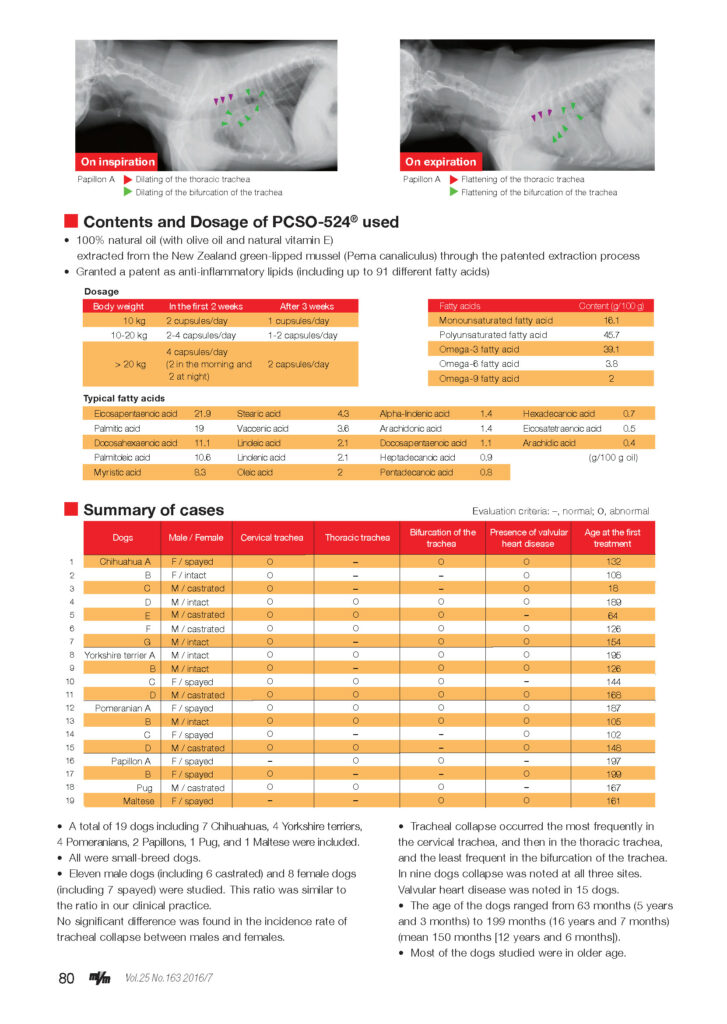
PCSO-524® Report Clinical Results of Nineteen Dogs with Tracheal Collapse that received PCSO-524®, a Lipid Extract of the New Zealand Green-Lipped Mussel (Perna canaliculus)
 Authors:
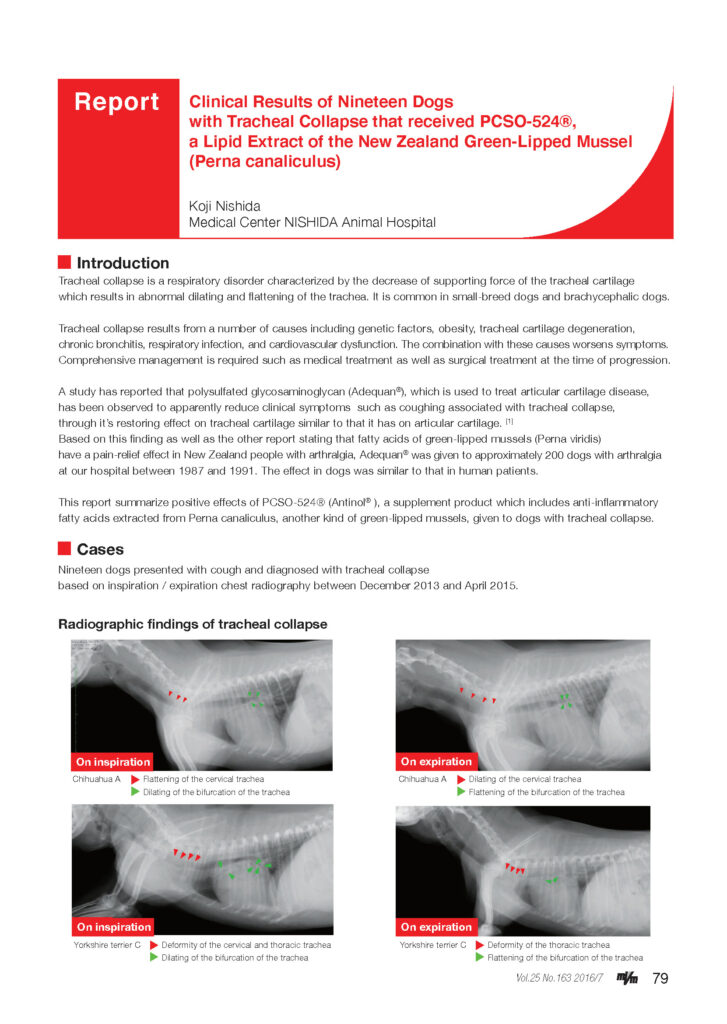
Case: Nineteen dogs presented with cough and diagnosed with tracheal collapse based on inspiration / expiration chest radiography between December 2013 and April 2015.
Tracheal collapse is a respiratory disorder characterized by the decrease of supporting force of the tracheal cartilage which results in abnormal dilating and flattening of the trachea. It is common in small-breed dogs and brachycephalic dogs. Tracheal collapse results from a number of causes including genetic factors, obesity, tracheal cartilage degeneration, chronic bronchitis, respiratory infection, and cardiovascular dysfunction. The combination with these causes worsens symptoms.
Comprehensive management is required such as medical treatment as well as surgical treatment at the time of progression.
This report summarize positive effects of PCSO-524® (Antinol®), a supplement product which includes anti-inflammatory fatty acids extracted from Perna canaliculus, another kind of green-lipped mussels, given to dogs with tracheal collapse.
Updated Study Topics
New researches and publications related to PCSO-524® and its result in clnical test submitted by veterinarians on the global conferences every year and the data keeps growing with more studies conducted